

Phthalates Bulletin

Phthalates are used as plasticizers and are frequently added to PVC products to soften them and add more flexibility. If a plastic product is soft and flexible, it may contain a significant quantity of phthalates unless it is labelled specifically otherwise. Phthalates are also often added to personal care products, such as nail polish, perfumes, deodorants, hair gels, shampoos, soaps, hair sprays, and body lotions, to help lubricate other substances in the formula and to carry fragrances.
Health Concerns
Children under the age of three are more at risk from contact to phthalates because of their developing, smaller body size and ever-present exposure to soft children’s products manufactured using multiple types of phthalate compounds.
Young children use their mouths to explore, and consequently, can be exposed to higher levels by sucking on products made of plastics containing phthalates.
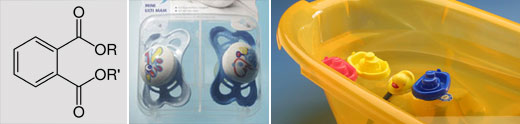
The US Congress has permanently banned three types of phthalates: DEHP, DBP, and BBP in any amount greater than 0.1 percent (computed for each phthalate individually) in children's toys, and any child care article that is designed or intended by the manufacturer to facilitate sleep or the feeding of children aged 3 and younger, or to help children aged 3 and younger with sucking or teething.
How can we recognize plastics toys and containers possibly containing an unsafe level of phthalates?
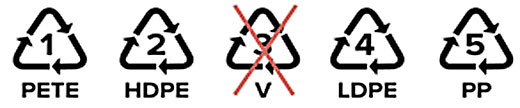
We can look for the recycling symbol usually molded into the plastic on the bottom of the product. Choose products with the numbers 1,2, 4 and 5 within the arrows. Many companies use non-plasticized substances such as polypropylene (PP), recycling code 5, to manufacture children's products. Avoid products with the number 3 within the arrows and the letters “V” or “PVC” below the arrows.
HMC makes sure through supplier audits and questionnaires that we are aware of phthalates contained in any raw materials that may be utilized in our production process. HMC products contain less than 0.1 percent phthalates.
If customers would like to check the phthalates status of the product used in an application, please download the relevant HMC RAPIDS document or contact HMC’s Regulatory Engineer at regulatory@hmcpolymers.com