

Picnic Plast Grows Housewares Sector
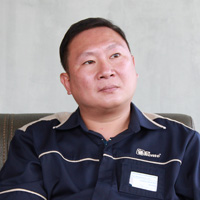
Interview: Khun Yuttana Thiamchivasin, Board Director of Picnic Plast Industrial Company Limited
Picnic Plast Industrial Co., Ltd., a strategic customer of HMC Polymers, is one of the leading and largest manufacturers of household products in Thailand. Founded in 1964 by the father of current Picnic Plast Board Director, Khun Yuttana Thiamchivasin, the company has grown steadily over the decades and enjoys an international reputation as a quality manufacturer of household and industrial products.
Picnic Plast Industrial markets under the brand PICNIC and sub-brands NANNY and NOAH for a full line of baby products, CLIP PAC for premium food containers, CUCINA for home kitchen utilities, CASA for household products, and TAVOLA for plastic picnic sets.
The company started modestly in 1964 and in 1977 the factory moved to a new expanded location. In the decades since that move, Picnic Plast Industrial has gained considerable experience in the design, manufacture and marketing of plastics housewares. This has been reflected in its growing market share in Thailand and the Southeast Asia region.

Over the 15 years Picnic Plast Industrial and HMC Polymers have been collaborating, the capability profile of HMC polypropylene has expanded in virtually every key area relating to physical properties and processing characteristics. The latest opportunities for housewares products made from the HMC PP portfolio include new levels of clarity, stiffness, flexibility, impact resistance and thin walling.
Khun Yuttana Thiamchivasin, representing the second generation of Picnic Plast Industrial Company leadership, offered HMC Connect the opportunity to interview him for 3Q HMC Connect and to visit the company’s new state-of-the-art facility on its opening day at Aytthaya, 100 km. from Bangkok.

The Interview
Khun Yuttana: “My Father established the company in 1964 with 80-sq m of space which was expanded to 5 rai (0.8 hectares/1.98 acres) and moved to the new location with the first launch of the company’s flagship brand, PICNIC.”
“Then, we moved the factory again to Aytthaya; with a space of more than 100 rai (16 hectares/39.5 acres) and 24 injection moulding machines producing plastics housewares and industrial products.”
Currently, Picnic Plast Industrial has a plastics production capacity of more than 15,000 tons per year, using 125 injection moulding machines and with over 800 employees. The company has expanded its product offering for both domestic and international markets with comprehensive plastic product ranges for housewares, kitchenware, industrial products, furniture, food containers, electronic parts, and gift items.”

The housewares industry in Thailand has had an interesting and rapid progression according to Khun Yuttana. “In the past, this business had virtually no product design and development” he said. “Small manufacturers copied existing products with slight changes to the styling. As a result, existing design and technical patents in the plastic housewares business are not particularly relevant to the state of our industry.”
“In this business, the companies who lead the market are invariably the ones who have the best range of products per category. This cannot be achieved overnight and high cost and amortization of injection mould tooling per product can present challenges for new entrants into the marketplace.”
“This means that any manufacturer that can deliver complete lines of housewares items will most likely be a leader in that segment.” For example, manufacturers who can produce various sizes of trays starting from small to extra large sizes with a variety of colors for customers to select from will receive the lion’s share of the market."
“Luckily for Picnic Plast Industrial, we have consistently built broad-based product ranges over 20 years and made the investment in new product development. That’s why retailers generally offer good allocations of shelf space to serve our customers.”
“Our products are not only sold through department store channels, but also via direct sales, and OEM (Original Equipment Brand Manufacturer) sales and export markets offering alternatives based on our customers’ requirements. As an example, following Thailand’s flood crisis last year, replacement plastic housewares were in high demand through multiple sales channels.”
In the decade since Khun Yuttana’s appointment as Board Director, the company’s production capacity and market share has grown consistently. He revealed some secrets of his business success to us that have been adopted as key points in the Picnic Plast Industrial corporate vision:
- Compete with yourself – especially in areas of operation, costs, employees and machines.
- Do not stick rigidly with existing methods or rules if there may be better ways. Try to create new solutions by utilizing the latest technologies available.
- Strive to compete at the highest international standards – with the best in the business
- Adopt continuous production lines in one location to reduce costs (and boost profits) through savings in time and logistics
The new Picnic Plast Industrial production facility reflects the success of Khun Yuttana’s approach and vision. The reduction of process redundancy and the development of a continuous production line, including efficient raw material management and logistics, have all been keys to the success of Picnic Plast Industrial.
HMC Polymers has been pleased to play a vital role in assisting the growth of Picnic Plas Industrial’s business in Thailand with latest technology polypropylene products for all markets, and close collaboration for all technical aspects, service and logistics.
In addition, Khun Yuttana commented that "in becoming one of the largest plastic housewares manufacturers in Thailand, a key success factor which could not be purchased is the productive operating culture and skill of our employees. My working philosophy is to respect others. I believe when they are recognized, they invest more efforts on behalf of our company.”
Nevertheless, ASEAN Economic Community or AEC, which will be operational in 2015, could create a potential labor problem, Khun Yuttana said. Now, more than 30% of businesses in Thailand are staffed by foreign labor. If AEC is applied, and labor trade is free, Thailand could face an internal labour shortage.
Also, regarding the Thai plastics housewares industry, in Khun Yuttana’s opinion there is a clear market need for products designed for local preferences and made in Thailand.
He said: “While there is a lot of external pressure from non-Thai manufacturers and sales channels, the local market still needs Thai manufacturers to develop, manufacture and market innovative home grown products. Picnic Plast Industrial sees this as both a challenge and an opportunity.”