

Smart Packaging Means Business

For the HMC Connect 3Q edition we interviewed Khun Thongchai Oranrigsupak, Managing Director of Benjamit Packaging which is a market leader in the manufacture and marketing of metal and plastic packaging for a broad array of consumer markets including food, drinks, personal care and premium gifts.
Benjamit Packaging is located in Nakornpathom, a one hour drive from central Bangkok and the company has over 400 full-time employees. Benjamit has leading expertise in the production of innovative packaging made from metal and thin-walled plastics.
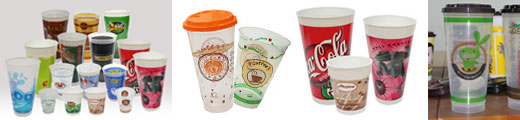
The company makes a large range of thin wall plastic cups for use in food and beverage applications such as coffee, instant noodles, yoghurt and other foods where customers seek product qualities including low odour and taste transfer, high impact resistance, good aesthetics and dimensionality – all at a competitive price.
Interview
Benjamit was established in 1982 as a business focused on the manufacture of metal packaging. In 1999 the business made a strategic decision to expand its range with plastic cups. Since then, the company has become a market leader and innovator in plastic packaging for the Thai food industry. Ninety percent of Benjamit’s customers are based in Thailand.
We asked Khun Thongchai: What were the reasons Benjamit Packaging decided to extend into the plastic cups business? As he explained: “We saw the high potential of plastic as our primary packaging material instead of metal production which was becoming progressively more expensive.

Our first selected plastic product was a drinking cup designed for convenience stores. Since that introduction, the sales volume of our plastic products range has now almost reached 50% of total sales."
In 2003, Benjamit installed the first dry offset cup printing machine in Asia. The machine, which prints up to nine separated colours, helped Benjamit deliver the very high printing quality on both metal packaging and plastic products for which company is renowned.
Plastic products in the Benjamit product portfolio include cups for both hot and cold coffee, drinking water for convenience stores, instant noodle cups (including high tolerance tamper-evident caps), cups for fruit juice, yoghurt, coleslaw, ice-cream and popcorn; and also other varieties of food packaging.
Benjamit recently installed two state-of-the-art Polytype cup printing machines from Switzerland. The Polytype machines offer industry leading production speeds at between 500-600 cups per minute.
Benjamit’s high speed injection machines include Nestal injection machines from Switzerland, Krauss Maffei from Germany and Sumitomo from Japan.
Leveraging this capability, Benjamit’s sales volume growth in 2012 was over 300 Million Baht with a moulding production capacity of around 130 tons/month.

As Khun Thongchai explained: “Our sales strategy does not depend on one or two big customers. We always work towards a broad and diversified customer base. Our top purchasing customers count for about 6% of our total sales portfolio. In this way we have low risk exposure even if we lose key customer orders due to unforeseen circumstances.
Also, our focus is on the delivery of quality product and customer service at a competitive price point. That does not mean we always seek to sell at the lowest price.
We strive to deliver customer value through, service, product quality, innovation, and of course price is important" To do that we must have the right people in place, the latest production facilities and the right material to deliver excellent high speed processing and end-use capabilities.
Benjamit currently uses HMC Polymers’ Moplen HP649T, which for us provides the best balance between clarity and stiffness in the production of transparent plastic products.
Benjamit also uses Moplen HP544T for the production of white plastic coffee cups and instant noodle cups. Both products offer easy processing in the latest high speed machines and excellent end use properties.
When asked about future directions for Benjamit, Khun Thongchai said: “Benjamit’s strategy is to constantly innovate in the food packaging space to offer customers new designs which can differentiate them in the market. To do that we need materials which are able to mould thinner, faster and in more complex shapes, look clearer and withstand impact.
We are always searching for ways to reduce material volume and produce at lower energy consumption, not only for company savings, but also to lower logistics costs, and yes, for our world – it’s the right thing to do."
“We are working closely with HMC Polymers to achieve these goals. For example, the PP L/t ratio (length to wall thickness) of products should be around the industry high standard of 300. The higher number indicates better performance. The L/t ratios of Benjamit's products are around 250-320 depending on each product. This helps us reduce the weight of each product by around 10%,” said Khun Thongchai. “That’s heading in the right direction and something our customers can really get excited about!”
To learn more about how Moplen HP6041 and Moplen HP544T PP homopolymers may improve your packaging processes and capability, contact HMC Polymers sales at: sales@hmcpolymers.com
Moplen HP649T Product Information
To learn more about Benjamit Packaging Co.,Ltd. visit:
Corporate: www.benjamit.com
Retailing: www.benjamit-plaza.com
Facebook: www.facebook.com/benjamit
Twitter: twitter.com/benjamits