

HMC Polymers shows concern for national park officers Donates isolation gowns to reduce the risk of zoonotic diseases
Although the Nipah virus has not yet spread to Thailand, preparedness is always the best approach.
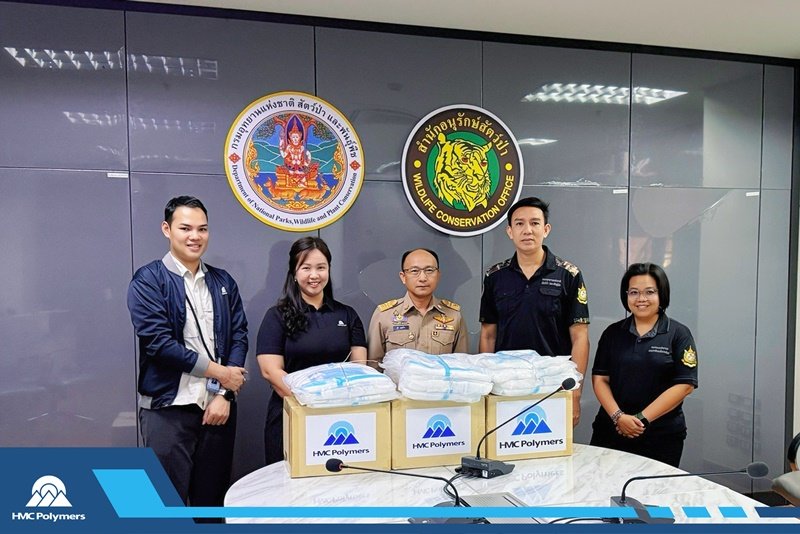
HMC Polymers Company Limited (HMC Polymers) has therefore donated 350 isolation gowns to the Department of National Parks, Wildlife and Plant Conservation for use by officers working in areas at risk of zoonotic infections, such as caves. The isolation gowns are manufactured from specialty grade PP plastic resin, impact copolymer polypropylene, in the form of a transparent film. Key features include high toughness and durability, excellent resistance to liquid penetration, and heat-sealed seams with no needle holes, allowing the gowns to effectively prevent contact with bodily fluids and enhance safety for officers of the Department of National Parks, Wildlife and Plant Conservation.
Furthermore, the isolation gowns donated by HMC Polymers have been tested in accordance with the ANSI/AAMI PB70 Standard of the United States, certifying their ability to resist water penetration at a pressure of more than 50 centimeters of water. This makes them suitable for use in areas with moderate risk, such as emergency rooms.
The donation of isolation gowns to the Department of National Parks, Wildlife and Plant Conservation is not intended to cause public alarm regarding the Nipah virus, which has not spread to Thailand. Rather, it reflects a proactive approach to preparedness by leveraging HMC Polymers’ products, expertise, and innovation to connect with society and enhance quality of life in line with the company’s Connectivity pillar.
Note: Nipah virus infection occurs through direct contact with bodily fluids, such as saliva, urine, or feces, of fruit bats, or animals infected after consuming fruits contaminated with fruit bat bite marks or secretions, such as pigs, goats, and sheep. These animals can then transmit the virus to people who have close contact with them. Although human-to-human transmission is less common than that of COVID-19, infection can occur through close contact with the bodily fluids of an infected person during the contagious stage.