

Eco-friendly Composites
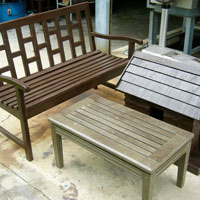
HMC Polymers is vitally interested in the development of new products based on our polypropylene manufacturing technologies. Similarly, we have a strong commitment to sustainable practices and the manufacture of PP materials which offer a long service life for end products.
When both of these objectives can be met at the same time it's certainly a win-win situation. HMC has working relationships with several university faculties who are investigating innovative uses for HMC PP grades and novel approaches to material additives and combinations.
One such cooperation is with Dr. Ittipol Jangchud, Associate Professor of the Polymers Program, Dept of Chemistry, Faculty of Science at KMITL (King Mongkut's Institute of Technology Ladkrabang) in Bangkok, Thailand.
We are pleased to publish Dr. Ittipol's article describing the basics of his study and testing in the field of Wood Plastic Composites using HMC Polymers' PP and other polymers as the base material.
WPCs: Eco-friendly Alternative for Wood Applications
Assoc. Prof. Dr. Ittipol Jangchud
Polymer Program, Dept of Chemistry, Faculty of Science, KMITL
What are “WPCs”?
WPCs stand for “Wood Plastic Composites”. They provide an eco-friendly alternative to the various woods used in a number of applications including outdoor landscaping, decking, furniture, and other outdoor uses. WPCs are materials consisting of a blend of cellulosic fibres and thermoplastics, such as, polyethylene (PE), polypropylene (PP), polystyrene (PS) and polyvinyl chloride (PVC). Thermoplastic resins soften when heated and harden when cooled. This property allows other materials, such as wood, to be mixed with plastics to form a composite product.
The resulting WPCs can be easily processed into various shapes and can be recycled. “Cellulosic fibres” or “wood” are ligno-cellulosic fibres, such as, wood flour, rice husk, coir fibres etc., typically in the form of milled wood products or particles of waste lumber of different grades and origins.
WPC compounds are made by mixing plastics and ligno-cellulose fibres with other additives, such as, processing aids, lubricants, compatibilizers, pigments, antioxidants, UV stabilizers, antimicrobial agents, etc. WPC products can be shaped by conventional plastic processes, e.g., extrusion, compression, and injection moulding. WPCs are therefore innovative materials converting low-value wood resources into high-value products.
To optimize composite performance, researchers are exploring material options, investigating processing effects, and improving engineering performance and durability. As substitutes for wood, WPCs have many excellent performance benefits such as light weight, high rigidity, water resistance, insect resistance, acid and alkali resistance. It can be nailed, drilled, planed, sawed, agglutinated and painted like lumber. Furthermore, it can also be decorated by printing or spraying.
WPCs are typically made using 30% to 60% wood filler as reinforcement. Wood flour is made commercially by grinding postindustrial materials, such as sawdust, coir, rice husk, planer shavings, chips into a fine, flour-like material. Wood fibre is more difficult to process compared to wood flour, however, wood fibre can lead to superior composite properties as it can act more as a reinforcement than wood flour. Wood fibre is available from both virgin and recycled sources.
Additives are also often used in WPCs. Additives are materials that are added in small amounts to enhance properties. For example, lubricants improve surface appearance and processing; coupling agents improve adhesion between the wood and plastics. Other additives include colorants, light stabilizers, anti-oxidants, and compatibilizers. Light-weight WPCs with cellular structures can be made by adding blowing agents.
Secondary processing of WPCs is a necessary method to make WPC products more attractive when they are used in furniture, sanitary and bathroom fixtures and other fields. Secondary processes can be carried out to improve appearance, such as embossing, laminating and painting.
What are the differences between WPCs made from different plastics?
WPCs can be made from different plastics. Naturally, WPC properties are inherited from their parent plastics. Their properties and applications are summarized in Table 1 shown below. Compositions of WPCs are also important, resulting in variations to product appearance, shape, strength, deflection, moisture absorption, fade resistance, microbial resistance, slip resistance, flammability, and other properties.
Properties of WPCs derived from different plastics and their common applications
| Polymer | Properties |
|---|---|
| PP | Lighter, stronger, stiffer, better creep resistance, less wear, and less slippery, but more brittle than PE. Low water absorption
|
| HDPE | More rigid, low water absorption, high resistance to chemicals and oxidation
|
| LDPE LLDPE |
Soft and flexible, easy to nail, screw, cut, and saw, low water absorption, high resistance to chemicals and oxidation
|
| PVC | Higher density, good flame resistant, stiff, but photo-degradation for outdoors, not environmentally friendly
|
| ABS | High flexural strength and flexural modulus, high water absorption
|
Three common processing methods for WPCs are extrusion, injection moulding, and compression moulding. Mechanical and physical properties, such as strength, stiffness, impact resistance, density, and colour, are important considerations in many WPC applications.
Different applications take advantages of properties that WPCs offer. For example, automotive applications take advantage of a lower specific gravity, compared with inorganic filled thermoplastics. Household products, such as paintbrush handles, scissor handles and flowerpots, take advantage of the aesthetics, resulting in a product that can look like wood but can be processed like a plastic.
Non- or semi-structural building applications, such as decking, roof tiles, and window trim, also take advantage of the wood look and offer improved thermal and creep performance compared with unfilled plastics.
Conclusion
Nowadays, WPCs are available commercially in different sizes and shapes. Innovation in WPCs includes light-weight foam extrusion, hollow boards and profiles. WPC qualities and performance are constantly being improved in terms of superior technical properties, aesthetic appeal of natural wood, and offer an exceptional lifespan.
To learn more about how the HMC PP portfolio may improve your processes and end-use product capabilities, visit our website www.hmcpolymers.com or contact HMC Polymers sales at: sales@hmcpolymers.com